
A proper wheel alignment is critical to tire life, handling, and overall vehicle performance—but an alignment can only do its job when the chassis and suspension components underneath the vehicle are in good condition.
Worn ball joints, tie rod ends, control arm bushings, and other components can introduce movement that causes camber, caster, and toe to change while the vehicle is being driven. Even if the alignment rack shows everything “in the green,” those measurements may not hold once the vehicle is back on the road.
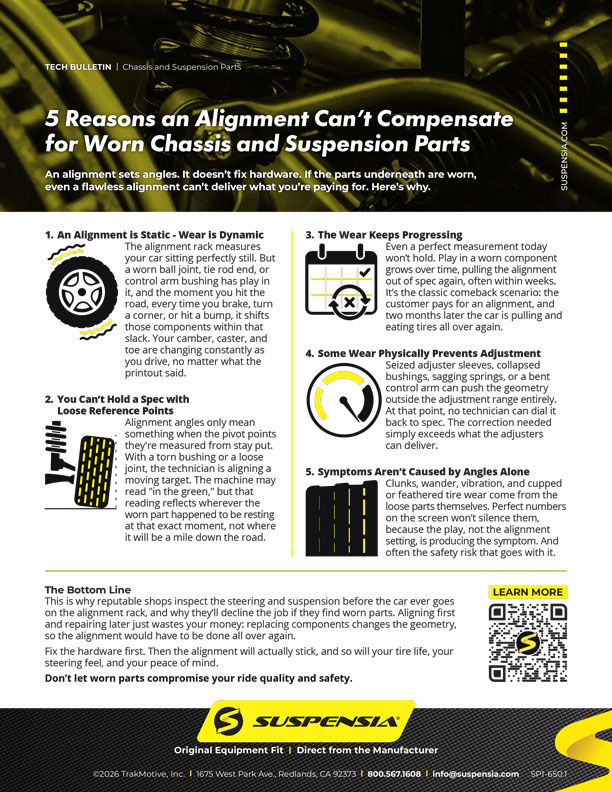
In this Suspensia Tech Bulletin, we highlight five reasons an alignment can’t compensate for worn chassis and suspension parts, including:
- An alignment is static, while wear is dynamic
- Loose reference points make it impossible to hold alignment specifications
- Component wear continues to progress
- Some wear can physically prevent proper adjustment
- Many common symptoms are caused by worn parts—not alignment angles alone
The proper approach is straightforward: inspect and repair worn steering and suspension components first, then perform the alignment. Replacing components after an alignment changes the vehicle’s geometry and can require the alignment to be performed again.
Download the complete Tech Bulletin to learn why fixing the hardware first helps protect tire life, steering feel, ride quality, and vehicle safety.