
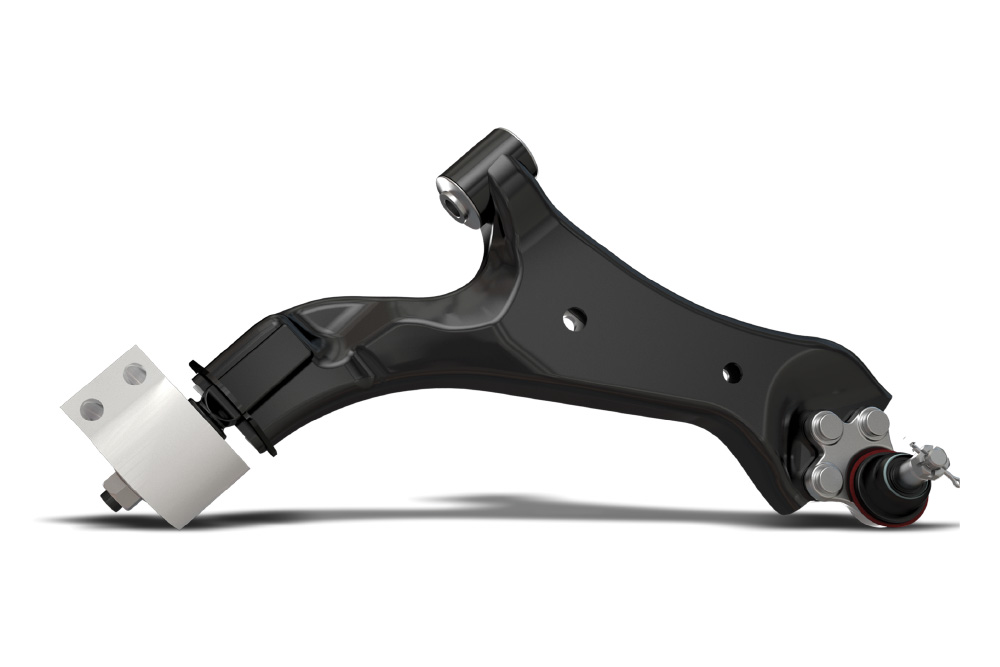
Control Arms | Wishbones
Suspensia control arms (also known as wishbones) maintain proper suspension geometry across all driving conditions.
These critical components ensure your vehicle’s wheels remain properly aligned, delivering consistent handling and tire wear.
Overview
The control arm provides a connection between the pitman arm and the chassis to maintain the caster and camber angles of the wheel. The pitman arm is supported by the control arm which has two parts: the upper control arm and the lower control arm.
It has similar functions as the wishbones in that it restricts variable forces coming up to the wheels, providing limited and controlled movement for them. It directly effects driving safety and comfort, and is among the most important elements of the chassis suspension system.
Complete Assembly Solution
Suspensia control arms are complete assemblies ready for installation, providing the
quality and ease of installation that professionals demand.
Key Features
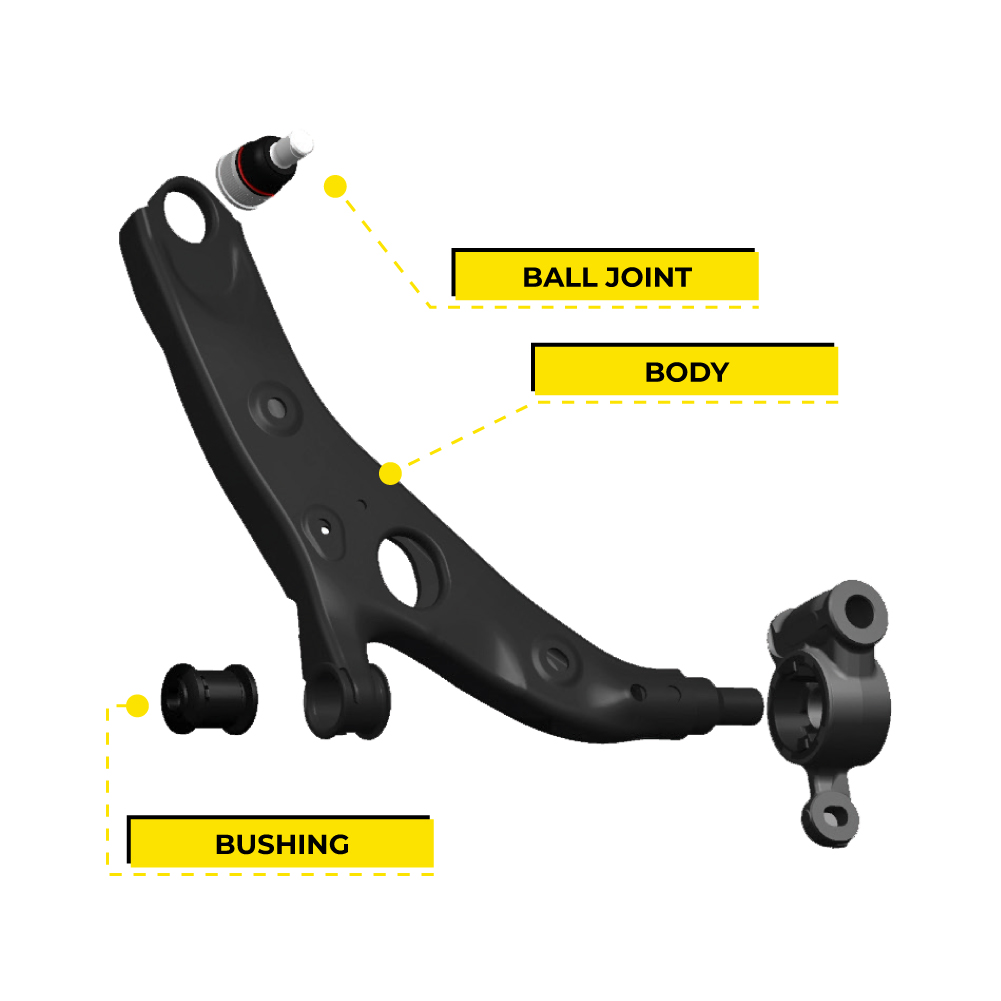
- CNC Machined Ball Joints – High-grade micro alloy steel construction
- Laboratory Tested – Strength-tested in state-of-the-art facilities
- Premium Bushings – Quality rubber or polyurethane options
- Heavy-Duty Construction – Powder-coated for corrosion resistance
- OE Production Standards – Guaranteed fit and quality
- Complete Coverage – Upper and lower control arms for European, Asian, and domestic vehicles
Superior Performance
Complete Suspensia assemblies provide improved overall performance compared to replacing individual components. Our integrated approach ensures all components work together optimally, delivering the handling and ride quality your customers expect.
Frequently Asked Questions
What is a control arm and what does it do?
A control arm (also called a wishbone or track control arm) connects your vehicle’s suspension to the chassis, allowing the wheels to move up and down over road surfaces while keeping lateral movement controlled. It’s one of the most critical components in your suspension system — directly affecting steering feel, ride comfort, tire wear, and driving safety.
What's the difference between upper and lower control arms?
Upper control arms connect the top of the wheel hub/knuckle to the chassis. Lower control arms connect the bottom. Not all vehicles use both — many modern front-wheel-drive vehicles use only lower control arms. Together they define the suspension geometry, including camber and caster angles.
What's the difference between a track control arm and a standard control arm?
A track control arm specifically connects the Pitman arm to the chassis to maintain caster and camber angles. Standard control arms link the suspension directly to the vehicle frame. Both restrict unwanted wheel movement and are among the most safety-critical parts in the suspension system.
How do I know if my control arms need to be replaced?
Common signs include clunking or knocking sounds from the front suspension, pulling to one side while driving, vibration in the steering wheel, uneven or accelerated tire wear, and a loose or imprecise steering feel. A worn control arm bushing or ball joint within the assembly is often the root cause.
Do control arm bushings wear out separately from the arm itself?
Yes — bushings are typically the first part of a control arm assembly to wear. However, in many cases it’s more practical to replace the entire arm rather than press out and replace individual bushings, especially on older vehicles. Suspensia control arms are available as complete assemblies where applicable.
Will I need a wheel alignment after replacing control arms?
Yes, in virtually every case. Control arms directly affect suspension geometry — camber, caster, and toe angles. Replacing a control arm without performing a wheel alignment afterward can lead to accelerated tire wear and imprecise handling. Always schedule an alignment after this repair.
Are Suspensia control arms OE quality?
Yes. Suspensia control arms are engineered and manufactured to meet OE standards in fit, form, and function. The brand’s product line is built on the principle that steering and suspension components are too safety-critical to compromise on quality.
What's the difference between a control arm with a ball joint and one without?
A control arm with an integrated ball joint comes as a complete assembly — the ball joint is already pressed in and ready to install. A control arm without a ball joint requires a separate ball joint to be installed. In many cases, the complete assembly is preferred for ease of installation and to ensure proper component compatibility.
Are Suspensia control arms available with or without a ball joint?
Suspensia offers control arms both with and without integrated ball joints, depending on the application. When available as a complete assembly, the integrated ball joint is pre-installed and ready to go — saving installation time and ensuring proper fitment between components.
What vehicles do Suspensia control arms fit?
Suspensia covers a wide range of domestic, Asian, and European vehicles — from compact cars to light trucks and SUVs. Use the product catalog with your year, make, and model to confirm the correct part for your application.
Do Suspensia control arms come with hardware?
Hardware inclusion varies by part number and application. Check the specific listing for your vehicle to confirm what’s included. When in doubt, it’s good practice to replace mounting bolts and nuts at the time of installation.
Can I replace just one control arm, or do I need to do both sides?
While it’s possible to replace a single arm, replacing both sides at the same time is generally recommended when both are showing comparable wear. Mismatched arms can create uneven handling and may result in the second side failing shortly after.
Is replacing a control arm a DIY job?
Control arm replacement ranges from moderate to advanced difficulty depending on the vehicle. Lower control arms with integrated ball joints, in particular, may require a spring compressor or ball joint press. Many technicians recommend this job be performed by a professional to ensure proper torque specs, safe spring handling, and post-installation alignment.
What causes control arms to fail prematurely?
Road impacts (potholes, curbs), corrosion, and deteriorated bushings are the most common causes. Driving on rough terrain or with improperly inflated tires can accelerate wear. Regular suspension inspections — especially after a significant impact — can catch wear before it becomes a safety issue.
What happens if I ignore a worn control arm?
A failing control arm compromises your vehicle’s suspension geometry, leading to unpredictable handling, accelerated tire wear, and in severe cases, loss of steering control. It can also cause accelerated wear on surrounding components like ball joints, tie rod ends, and wheel bearings. This is not a repair to defer.
Are Suspensia control arms covered by a warranty?
Yes. Suspensia products are backed by a warranty covering defects in materials and workmanship. Check your specific part listing or contact your distributor for warranty terms applicable to your purchase.
Do Suspensia control arms require any special tools to install?
Depending on the application, you may need a ball joint press, bushing press, or torque wrench. Vehicles with front coil-over suspension may also require a spring compressor. Always consult the vehicle’s service manual for torque specifications and procedures before beginning the repair.