
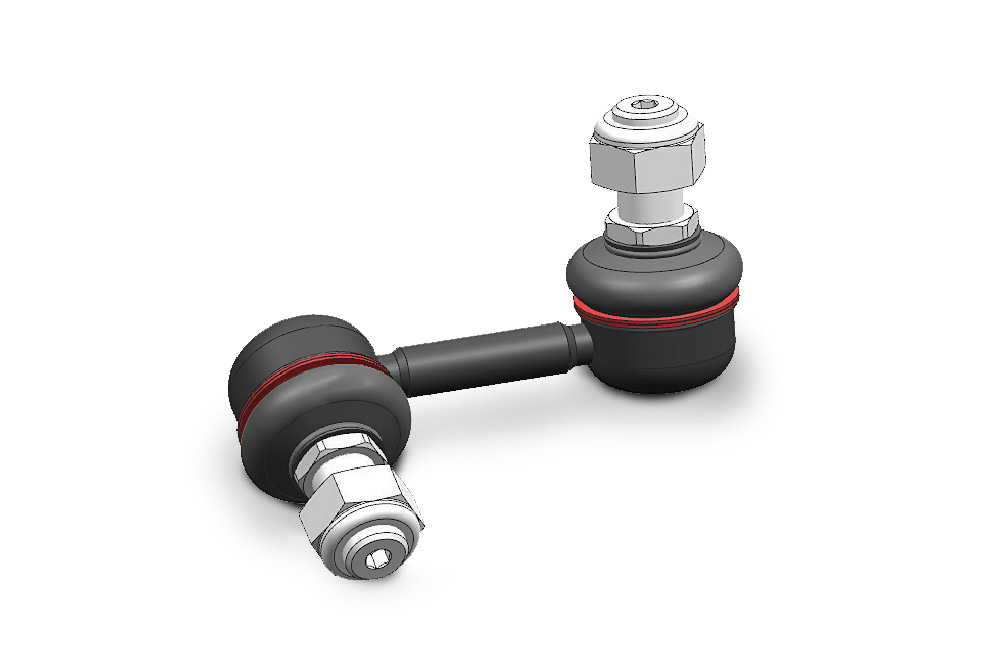
Stabilizer Links
Suspensia stabilizer links combine advanced materials with precision engineering to deliver superior performance and extended service life.
Our innovative low-friction polymer design reduces wear while maintaining optimal sway bar functionality.
Overview
Stabilizer links provide the balance of movement between the suspension arm and the stabilizer bar, making for a more comfortable ride by controlling body roll.
Stabilizer links connect the sway bar to the suspension components – usually the control arm or the strut. They transfer forces from the suspension into the sway bar, allowing it to resist body roll.
Advanced Engineering
Every Suspensia stabilizer link is engineered with attention to detail that makes the difference between adequate and exceptional performance.
Key Features
- Low-Friction Polymer Design – Reduces wear and extends service life
- Corrosion-Resistant Finishes – Protection against rust and corrosion
- Locking Spacers – Ensure correct installation tolerances
- Positive Seal Dust-Boots – Prevent environmental contamination
- Complete Hardware Included – All necessary mounting components
- OE Production Standards – Quality and safety guaranteed
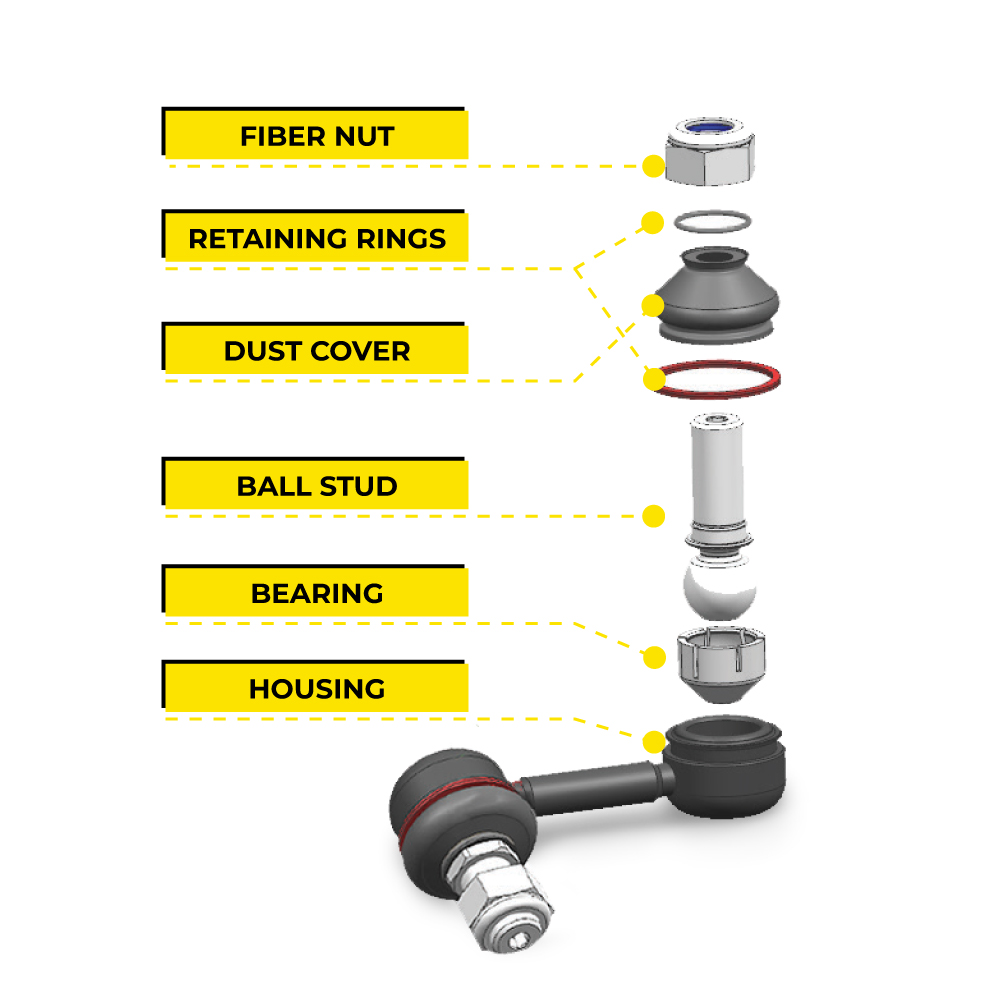
Complete Installation Solution
Each Suspensia stabilizer link comes complete with all necessary mounting hardware, locking spacers, and protective dust boots. This ensures proper installation and optimal performance from day one.
Frequently Asked Questions
What is a stabilizer link and what does it do?
A stabilizer link (also called a sway bar link or end link) connects the stabilizer bar to the control arm or vehicle body. It transfers force between the two sides of the suspension during cornering to reduce body roll and keep the vehicle level. One end attaches to the center link, the other to the control arm — and when it wears out, handling and ride comfort both suffer noticeably.
What's the difference between a stabilizer link and a sway bar?
The sway bar (stabilizer bar) is the long metal rod that spans across the suspension from side to side. The stabilizer links are the short connecting rods at each end that attach the sway bar to the control arms or chassis. The links transfer the sway bar’s anti-roll force to the suspension — they work together as a system.
How do I know if my stabilizer links need to be replaced?
The most common symptom is a clunking or rattling noise from the front suspension, especially when going over bumps or making turns. You may also notice increased body roll in corners, loose steering feel, or a general sense that the vehicle is less planted than it used to be.
Can a bad stabilizer link affect steering?
Yes. Worn stabilizer links reduce the sway bar’s ability to control body roll, which shifts weight unevenly across the suspension during cornering. This can make the vehicle feel vague or unpredictable in turns — particularly at highway speeds or during quick lane changes.
Are stabilizer links and end links the same thing?
Yes. Stabilizer links, sway bar links, and end links all refer to the same component. The terminology varies by region and manufacturer, but they describe the same short connecting rod between the sway bar and the suspension.
Do I need to replace stabilizer links in pairs?
It’s strongly recommended. Stabilizer links on both sides wear at similar rates. Replacing only one side can create an imbalance in the anti-roll system, leading to uneven handling. Replacing both at the same time also avoids a repeat repair in the near future.
Are Suspensia stabilizer links available for front and rear applications?
Yes. Suspensia offers stabilizer links for both front and rear applications across a wide range of domestic, Asian, and European vehicles. Use the product catalog with your year, make, and model to confirm fitment.
What vehicles do Suspensia stabilizer links fit?
Suspensia covers a broad range of cars, trucks, SUVs, and crossovers — including popular applications like Chevrolet, Toyota, Mazda, Kia, and many more. Always verify fitment using the vehicle lookup on the Suspensia catalog before ordering.
Are Suspensia stabilizer links covered by a warranty?
Yes. Suspensia products are backed by a warranty covering defects in materials and workmanship. Check your specific part listing or contact your distributor for the warranty terms applicable to your purchase.
Do Suspensia stabilizer links come pre-greased?
Yes. Suspensia stabilizer links come pre-greased with high-performance grease for smooth, quiet operation right out of the box. No additional prep is required before installation.
Are Suspensia stabilizer links OE quality?
Yes. Suspensia stabilizer links are precision-engineered to meet OE standards for fitment, performance, and durability — designed to restore your vehicle’s handling to factory spec.
Is replacing stabilizer links a DIY job?
Stabilizer link replacement is one of the more accessible suspension repairs. In most applications it requires basic hand tools and takes 30–45 minutes per side. Some corroded or hard-to-reach installations may require penetrating oil and additional effort, but it’s generally considered a manageable DIY job for someone with basic mechanical experience.
Do I need a wheel alignment after replacing stabilizer links?
Not typically. Unlike control arms or tie rod ends, stabilizer links don’t directly affect alignment angles. However, if the vehicle has been pulling or handling poorly for an extended time, having alignment checked afterward is never a bad idea.
What causes stabilizer links to wear out?
Road impacts, corrosion, and normal wear on the internal ball joints or bushings within the link are the primary causes. Links that use rubber bushings rather than sealed ball joints tend to wear faster, particularly in wet or high-salt environments.
Can I drive with a bad stabilizer link?
Technically yes — a worn stabilizer link won’t cause immediate loss of vehicle control in most cases. However, it will reduce handling stability, increase body roll in corners, and can put additional stress on the sway bar and surrounding suspension components. It’s a repair worth doing promptly.
What does a stabilizer link look like?
A stabilizer link is typically a short metal rod — usually 6 to 10 inches long — with a ball stud or stud-and-nut at each end. Some designs use rubber bushings instead of ball joints. The exact shape varies by vehicle but the function is the same.
How long do stabilizer links typically last?
Stabilizer links generally last between 50,000 and 100,000 miles under normal driving conditions, though road conditions, driving habits, and exposure to moisture and salt can shorten that lifespan significantly. Vehicles driven frequently on rough roads or in winter climates may need them sooner.
What happens if I ignore a worn stabilizer link?
Beyond the handling degradation, a completely failed stabilizer link can cause the sway bar to contact other suspension or chassis components, potentially leading to noise, additional wear, and more costly repairs. It can also put undue stress on the sway bar mounts and bushings.
Do Suspensia stabilizer links require any special tools to install?
In most cases, no — a basic socket set and wrench are sufficient. Some applications may benefit from a ball joint separator if the existing link is seized. Always reference your vehicle’s service manual for torque specifications.