
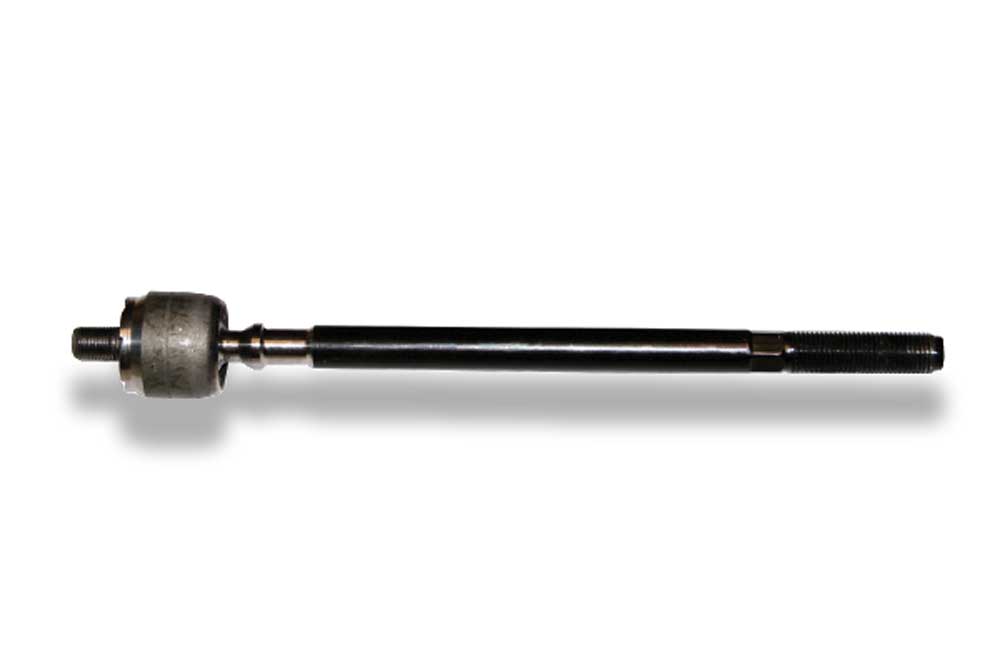
Inner Tie Rods | Steering Tie Rods | Axial Joints
Suspensia inner tie rods (also known as axial joints or steering tie rods) are critical components in modern rack and pinion steering systems.
Engineered for precision and durability, our steering tie rods ensure reliable steering performance across a wide range of driving conditions.
Overview
Inner tie rods are used for the linkage of rack and pinion steering gears and wheel spindle assemblies. It’s a joint that transmits the movement of the tie rod end to the tires from steering wheel to rotate it relative to its vertical axis.
Quality & Safety
Suspensia tie rods are produced and tested according to compliance with US and international automotive standarts for long-lasting usage considering safety.
Key Features
- OE Fit Guaranteed – Precise dimensions for proper steering geometry
- Complete Assemblies Available – Ready-to-install solutions
- Premium Materials – Corrosion-resistant construction
- Quality Control – Tested to ensure smooth operation
- Extensive Application Coverage – European, Asian, and domestic vehicles

Frequently Asked Questions
What is an axial joint (inner tie rod) and what does it do?
The axial joint — also called the inner tie rod or steering tie rod — connects your steering rack or center link to the outer tie rod end. It transmits the rotational motion from your steering wheel directly to the wheels, allowing them to pivot relative to their vertical axis and turn the vehicle. It operates under constant tensile load and must maintain that connection precisely across a full range of steering inputs. When it wears, steering becomes loose, unpredictable, and unsafe.
Why is an inner tie rod also called an axial joint?
The term “axial joint” describes how the component moves — it transmits force along its central axis rather than through an angular pivot like a ball joint. The inner tie rod functions as a threaded, load-bearing joint that handles both tensile forces and the rotational movement needed to steer the wheels. “Axial joint,” “inner tie rod,” and “steering tie rod” all refer to the same part.
How do I know if my inner tie rod needs to be replaced?
Worn inner tie rods typically show up as a vague, loose, or wandering steering feel — often described as the car “not going where you point it.” You may also notice clunking or knocking sounds when turning the wheel, uneven or feathered tire wear, and vibration in the steering column. A technician can confirm failure by checking for lateral play in the inner tie rod with the wheel off the ground.
Are Suspensia inner tie rods exact-fit replacements?
Yes. Suspensia inner tie rods are developed and verified for exact fitment in each specific application. The precision CNC-machined ball stud is manufactured from high-grade steel with minimal surface roughness, ensuring better handling, load integrity, and a direct OE-spec replacement without modification.
What is the corrosion-resistant finish on Suspensia inner tie rods?
Suspensia inner tie rods feature a corrosion-resistant coating applied during manufacturing to protect against moisture, road salt, and harsh weather conditions — extending service life in environments that accelerate rust and degradation on lesser parts.
Are Suspensia inner tie rods manufactured to OE standards?
Yes. All Suspensia parts are manufactured in IATF 16949 certified facilities to meet or exceed original equipment performance standards.
Do I need a wheel alignment after replacing an inner tie rod?
Yes, always. Inner tie rod replacement disturbs the toe setting, and driving without resetting alignment will immediately cause uneven, accelerated tire wear. A professional wheel alignment is a required part of this repair — not optional.
What's the difference between an inner tie rod and an outer tie rod end?
The inner tie rod (axial joint) threads directly into the steering rack and handles the primary transmission of steering force. The outer tie rod end connects the inner rod to the steering knuckle at the wheel. They work as a synchronized pair — together they form the complete steering tie rod assembly. When one is worn, the other is often close behind, and replacing both at the same time is frequently the more practical choice.
Should I replace the inner and outer tie rod at the same time?
In most cases, yes. The inner and outer tie rods work together as part of the same steering tie rod assembly. They wear at similar rates, and accessing the inner tie rod often requires disturbing the outer end anyway. Replacing both at once avoids a repeat repair in the near future and ensures the complete assembly is performing to spec.
Is inner tie rod replacement a DIY job?
Inner tie rod replacement is a more involved repair than an outer tie rod end. It typically requires a special inner tie rod removal tool to unthread the rod from the steering rack without damaging the rack boot. It’s manageable for experienced DIYers with the right tools, but many prefer to have it done professionally — particularly given that a post-repair alignment is always required.
What causes inner tie rods to fail?
Worn or torn rack boots are the most common culprit — once the protective boot is compromised, road debris and moisture contaminate the ball socket and accelerate wear. High mileage, frequent hard steering inputs, and driving on rough roads also contribute. Inner tie rod failure is often preceded by torn boots, which can be caught during routine inspections.
What vehicles do Suspensia inner tie rods fit?
Suspensia covers a wide range of domestic, Asian, and European vehicles. Use the product catalog with your year, make, and model to confirm the correct part number for your vehicle.
Can a worn inner tie rod cause my vehicle to fail a safety inspection?
Yes. Measurable play or looseness in the steering linkage — including the inner tie rod — is typically grounds for a safety inspection rejection in most states. If your vehicle is pulling, wandering, or exhibiting loose steering, have the inner tie rod inspected before your next inspection date.
What happens if I ignore a worn inner tie rod?
Continued driving with a worn inner tie rod causes increasingly unpredictable steering, accelerated tire wear, and added stress on the outer tie rod end, steering rack, and other linkage components. A fully failed inner tie rod can result in sudden loss of steering control — making this a repair that should never be deferred.
Are Suspensia inner tie rods covered by a warranty?
Yes. Suspensia inner tie rods are backed by a warranty covering defects in materials and workmanship. The warranty is non-transferrable. Check your specific part listing or contact your distributor for applicable terms.